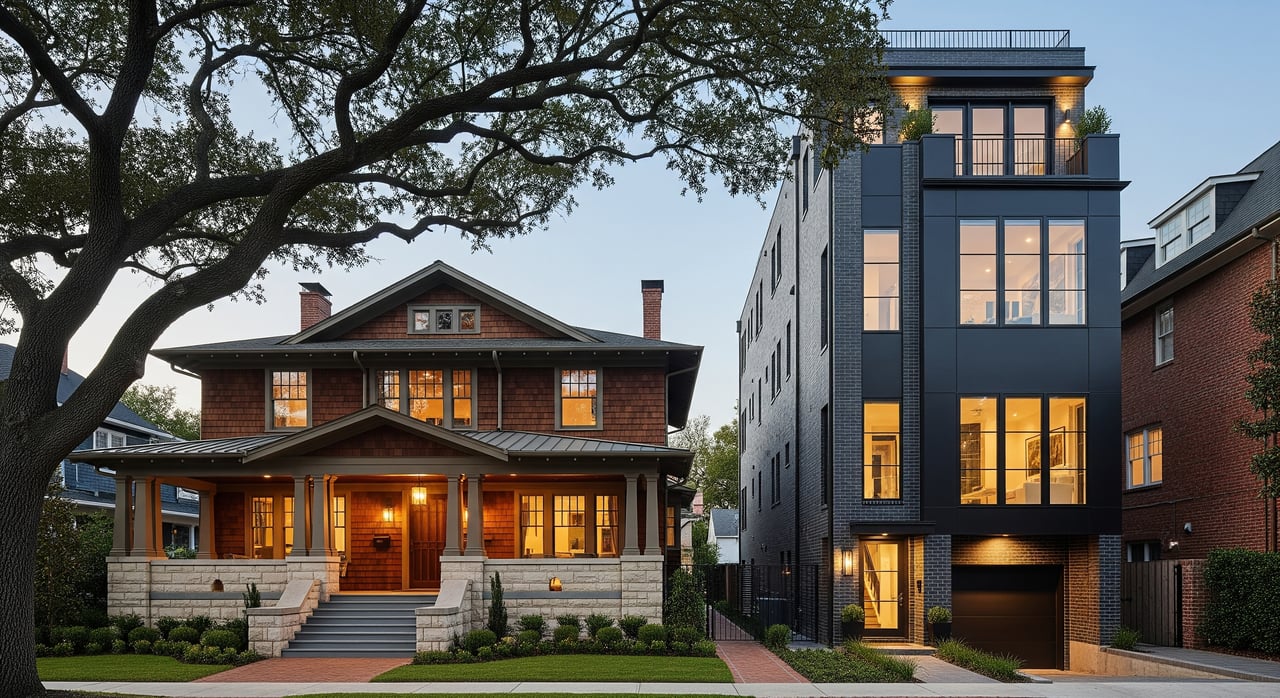
Torn between a sleek townhome and a charming bungalow in the Heights? You are not alone. Each option offers a distinct way to live, invest, and build long-term value in Northside and Houston Heights. In this guide, you will learn how they differ in layout, land use, ownership costs, financing, flood risk, and resale so you can pick the best fit for your goals. Let’s dive in.
Heights context that matters
Houston Heights blends early 20th-century bungalows with modern infill townhome clusters. That mix shapes the streetscape, lot sizes, and daily rhythm on each block. You will see porch-lined streets and mature trees beside newer, vertical living.
Houston does not have traditional citywide zoning. Instead, development is guided by deed restrictions, platting rules, building codes, and historic district overlays. Before you buy or renovate, review local resources from the City of Houston Planning and Development Department.
Flood risk varies block by block. While parts of the Heights sit at higher elevations than other Houston neighborhoods, proximity to bayous and drainage can impact risk. Always check the FEMA Flood Map Service Center and the Harris County Flood Control District for property-specific flood information.
Townhome vs bungalow basics
What a bungalow offers
- Detached, single-story or 1–1.5 story homes on individual lots.
- Classic character such as front porches, pitched roofs, and period millwork.
- Yard space for gardening, pets, or future additions.
- More separation from neighbors, which can help with privacy and noise.
What a townhome offers
- Multi-story attached units, often two to four levels with vertical living.
- Open-concept layouts, higher ceilings, modern kitchens and baths.
- Attached garages and often small or no private yard.
- Shared walls and HOA-managed exterior maintenance in many projects.
Lot, layout, and space
Bungalows typically sit on larger lots with room to expand. Many buyers value the yard, mature trees, and the ability to add a studio or extend the home, subject to platting and any deed restrictions.
Townhomes usually maximize the footprint for interior living. Expect smaller setbacks and limited yard area, especially in clusters where multiple homes replace a single former lot. If you prefer low yard upkeep, this can be a plus.
Age and construction
Bungalows in the Heights are often older homes built in the early to mid 1900s. Many rest on pier-and-beam foundations and can include older plumbing, electrical, and framing. Maintenance and system upgrades may be part of ownership.
Townhomes are typically newer construction from the 2000s to present. You get modern HVAC and materials, often on slab foundations. Keep in mind that shared walls, roof systems, and any rooftop decks may have unique maintenance considerations.
Historic character vs modern convenience
If you prioritize architectural charm and a porch culture, a bungalow’s historic details can be hard to beat. If you prefer a turnkey experience with contemporary finishes and an attached garage, a townhome might align better with your lifestyle. Both can work well for central Houston living.
Privacy, noise, and parking
Detached bungalows offer more spacing from neighbors and yard separation. Townhomes share walls, so sound-dampening depends on builder quality and construction details. For parking, many townhomes include garages, while bungalow parking varies by lot configuration and whether a garage or carport exists.
Costs and ownership differences
Purchase price and value drivers
In the Heights, new or newer townhomes often command a higher price per square foot due to finish level and central location. Bungalows on larger lots can command strong total prices because of land value and historic appeal. For current pricing and days-on-market trends, review reports from the Houston Association of REALTORS.
Taxes and exemptions
Property taxes are assessed through the Harris County Appraisal District. Verify assessed values, tax history, and any homestead or other exemptions on the HCAD site.
HOAs and maintenance fees
Many townhome communities have HOAs that cover exterior upkeep, common areas, landscaping, and sometimes partial insurance through a master policy. Review budgets, reserves, bylaws, and any special assessments. Bungalows are usually fee-simple single-family homes without an HOA, though some areas have deed restrictions or historic district rules.
Financing nuances
- Most townhomes are fee-simple and eligible for conventional, FHA, and VA loans, provided the project meets lender standards. Some are structured as condominiums, which may trigger additional project-level reviews.
- Bungalows finance like standard single-family homes. If you plan improvements, you can explore renovation loans such as FHA 203(k) or similar products through your lender.
- Prequalify early and ask your lender about any project-specific requirements for townhomes.
Insurance basics
- Townhomes: Clarify whether the HOA carries a master policy and whether you need an HO-6 or a separate homeowners policy for interior finishes and personal property. The Texas Department of Insurance offers guidance on homeowners coverage types.
- Bungalows: Standard homeowners policies apply. Premiums may vary with age of systems, roof condition, and prior claims.
- Flood: Even outside high-risk zones, many buyers elect flood coverage. Use FEMA and HCFCD resources and request elevation certificates where available.
Resale, rental, and investment
Buyers value both product types in the Heights for central access and amenities. Bungalows with preserved character on larger lots tend to remain in demand due to land scarcity. Townhomes with quality construction, timeless finishes, and desirable blocks can resell well. Oversupply of similar townhomes on a small area can pressure pricing, so pay close attention to design and location.
For rentals, updated townhomes often appeal to professionals seeking modern finishes. Renovated bungalows can attract long-term tenants, and larger lots may allow future expansion, subject to platting and any restrictions.
Renovation and redevelopment
Bungalows on larger lots can be candidates for additions, full renovations, or redevelopment. Some areas of the Heights have deed restrictions or historic designations that limit alterations or demolitions. Start with the City of Houston Planning and Development Department for historic district information and deed restriction guidance.
Townhome parcels are typically platted for individual units. Further subdivision or structural changes are more limited. Always confirm the recorded plat and consult permitting before pursuing changes.
Practical due-diligence checklist
- Confirm ownership type: fee-simple townhome, condominium, or single-family. Review the recorded plat.
- Pull HCAD records for tax history and parcel data on the HCAD site.
- Order a survey to verify lot lines, easements, and encroachments.
- Review HOA documents, CC&Rs, bylaws, budgets, reserves, and recent meeting minutes.
- Check City of Houston permit and code history, and resolve any open items through the City’s permitting portal.
- Review flood status using the FEMA Flood Map Service Center and HCFCD resources. Request prior flood claims data and elevation certificates when available.
- Hire a local inspector experienced with older homes and drainage, including WDO, foundation, and HVAC assessments.
- If the home has historic features or sits in a historic district, confirm any preservation rules before planning changes.
- Confirm parking, garage condition, and access.
- If school assignments matter to you, verify zones with the Houston Independent School District.
Which is right for you
Choose a Heights bungalow if you value:
- Historic character, a porch lifestyle, and yard space.
- Privacy from shared walls and potential room to expand.
- Willingness to manage maintenance and periodic system upgrades.
Choose a Heights townhome if you value:
- Turnkey living with modern finishes and an attached garage.
- Lower yard maintenance and HOA-managed exteriors.
- Vertical floor plans and efficient use of a central location.
Balance lifestyle with long-term plans. If you want to hold for decades and enjoy outdoor space, a bungalow can be a legacy play. If you want modern living with less yard care near restaurants and services, a townhome can be a strong choice. For current pricing, absorption, and block-level insights, monitor reports from the Houston Association of REALTORS.
Ready to align your choice with a broader wealth and lifestyle plan? Schedule a confidential strategy session with Terrolyn Nunn to map your next move through concierge buying or selling, relocation support, or investor advisory.
FAQs
Are Heights townhomes eligible for typical mortgages?
- Most townhomes are eligible for conventional, FHA, and VA loans if the project meets lender standards; confirm whether it is fee-simple or a condominium since condo projects have additional reviews.
Do townhomes really cost less to maintain?
- Yard care is usually lower, but you will have HOA dues and potential special assessments; total cost depends on dues, assessed value, and any repairs.
Are bungalows at higher flood risk in the Heights?
- Flood risk is property-specific; check the FEMA Flood Map Service Center and HCFCD resources for each address.
Which holds value better in the Heights?
- Both can perform well; bungalows on larger lots with preserved character are often prized, while well-built townhomes in desirable spots also resell strongly.
Can I split a bungalow lot to build multiple townhomes?
- It depends on platting, deed restrictions, lot size, and City of Houston rules; consult planning, a land-use professional, and review recorded documents.
Do townhome HOAs control exterior appearance?
- Often yes; HOAs typically regulate exterior treatments, paint, fencing, and common spaces, while single-family bungalows offer more individual control unless restricted by deed or historic rules.